Physics-constrained generative augmentation and hierarchical decomposition driven wind power forecasting framework under extreme weather conditions
DOI number:
10.1016/j.energy.2026.141322
Key Words:
Wind power forecasting;Extreme weather;Generative adversarial network;Signal decomposition;Deep learning
Abstract:
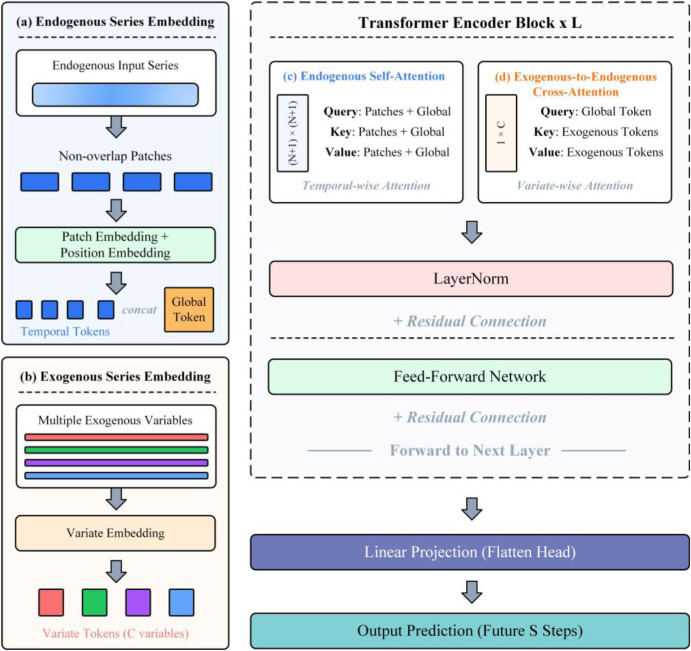
Accurate wind power forecasting under extreme weather remains challenging due to sample scarcity, strong non-stationarity, and multi-scale temporal coupling. This study develops a structured forecasting system integrating physics-constrained data augmentation, complexity-guided hierarchical signal decomposition, and adaptively optimized deep learning. A Physics-Constrained Real-World Time Series Generative Adversarial Network (PC-RTSGAN) embeds power curve constraints, icing derating mechanisms, and temporal consistency rules into the generation process to produce physically plausible synthetic samples. A three-level Decomposition strategy combining Improved Complete Ensemble Empirical Mode Decomposition with Adaptive Noise (ICEEMDAN), Adaptive Multi-Scale Weighted Permutation Entropy (AMWPE)-guided clustering, and Adaptive Variational Mode Decomposition (AVMD) progressively extracts multi-scale features from non-stationary power series. A hybrid model integrating multi-order Kolmogorov-Arnold Network (MKAN) with TimeXer captures nonlinear feature interactions and endogenous-exogenous variable dependencies, with hyperparameters configured via Phototropic Growth Algorithm (PGA). Validated on a wind farm in Inner Mongolia, China, the framework achieves Normalized Mean Absolute Error (NMAE) of 0.0144 and Normalized Root Mean Square Error (NRMSE) of 0.0225 for cold wave events, and NMAE of 0.0164 and NRMSE of 0.0281 for strong wind events, outperforming all comparative models. These results are encouraging, though the validation remains limited to a single wind farm and broader cross-regional verification is needed.
Links to published journals:


 Paper Publications